

Is White Water Rafting Dangerous? An Honest Safety Guide
By the Cascade Raft & Kayak guide team · Idaho-licensed outfitter since 1985 · Last updated: August 2026
The honest answer: white water rafting carries real risk. Moving water is powerful, rafts can flip, and people sometimes end up swimming — no outfitter can promise otherwise. But on professionally guided trips that risk is small, measured, and managed: a multi-year American Whitewater study found just 0.45 fatalities per 100,000 commercial user days — a lower rate than recreational swimming or bicycling. And the single biggest safety factor is one you control: the water you choose. At Cascade Raft & Kayak, every trip includes Coast Guard-approved life jackets, a full safety briefing, and Idaho state-licensed guides — part of why we've earned a 5.0-star rating from 1,670+ guests since 1985.
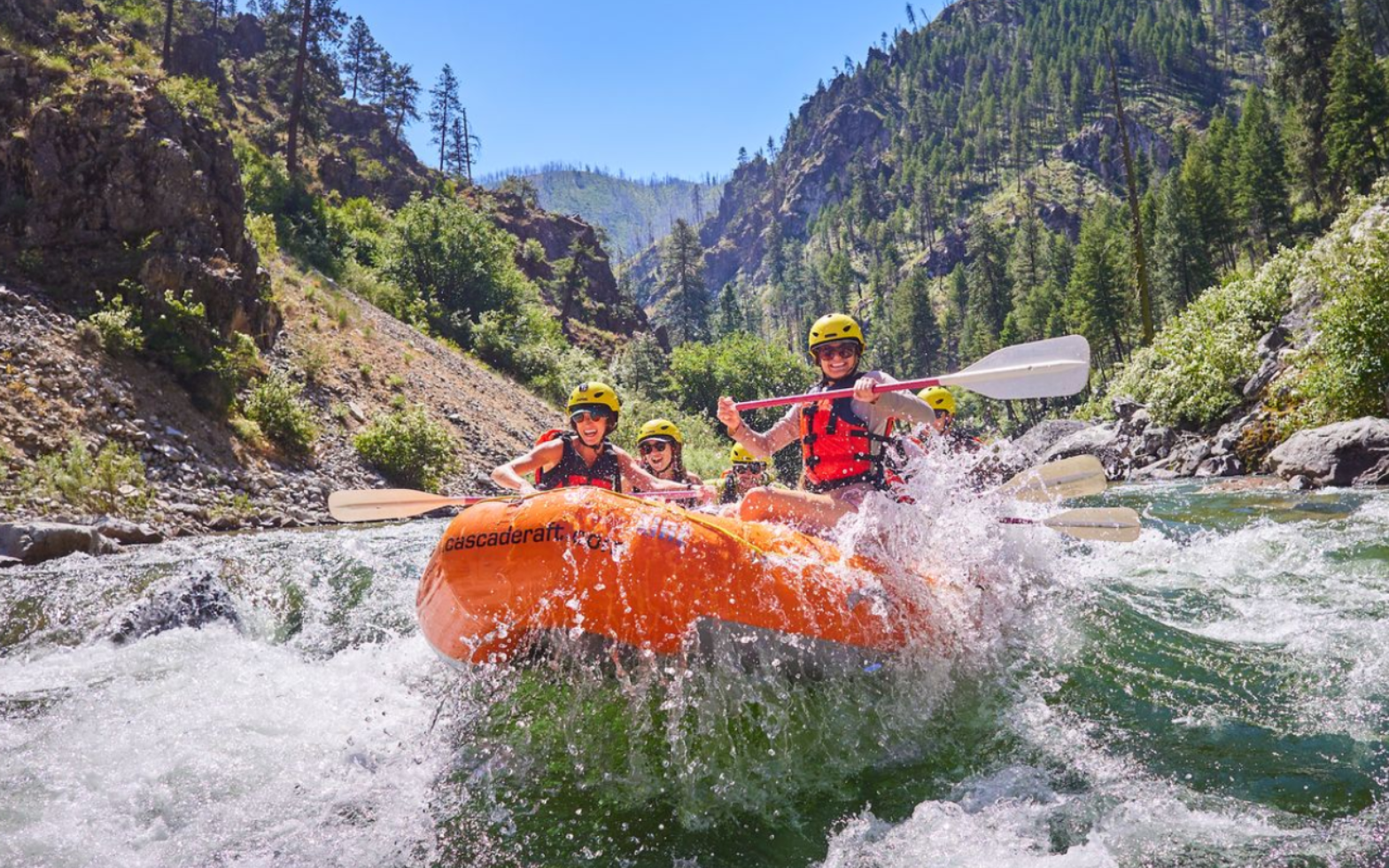
How many people die white water rafting each year?
Very few on guided trips. A multi-year American Whitewater risk analysis covering 30 U.S. rivers and 7.4 million user days put commercially guided trips at 0.45 fatalities per 100,000 user days — a lower rate than recreational swimming (2.6), bicycling (1.6), or rock climbing (3.2) [source].
And the pattern still holds today. Across all of 2025, American Whitewater's accident summaries recorded just one commercial rafting fatality in the entire United States. The overwhelming majority of whitewater deaths involved private boaters on unguided trips — and many of them weren't wearing life jackets [Jan–Jun 2025] [Jul–Dec 2025].
That gap is the whole argument for going guided. Same rivers, same water, but private boaters in the AW study showed a fatality rate five times higher than commercial trips. The difference is everything an outfitter wraps around you: a trained guide in your raft, a Coast Guard-approved life jacket that stays on, a trip matched to your group's ability, and a safety briefing before you ever leave the bank.
You Choose Your Risk Level: Chill or Thrill
Risk on the Payette isn't one number — it scales with the water you pick, and you're the one picking:
| Track | Trips | Class | Ages | What that means for risk |
|---|---|---|---|---|
| Chill | SPLASH, ESCAPE | II–III | 5 and up | Playful water, long calm stretches, no paddling experience required |
| Thrill | RUSH, PLUNGE, SUPER SOUTH FORK | III–IV | 12+, 100 lb min | Technical water, everyone paddles, bigger consequences if you're not ready |
Not sure which side fits your group? Start with Chill — it's the lower-risk way to find out how you feel about white water, and nobody has to prove anything on day one.
Is whitewater rafting dangerous?
Like any outdoor adventure, whitewater rafting carries some inherent risk, but on professionally guided trips that risk is well-managed, and serious incidents are uncommon. The two biggest safety factors are simple: choose a licensed, experienced outfitter, and pick a rapid class that matches your group's ability. A calm Class II - III float and a technical Class IV run are very different experiences, and a good outfitter helps you pick the right one.
Is whitewater rafting safe for kids?
Yes - white water rafting is a great family activity when you choose a family-friendly trip. On our Class II - III Main Payette and North Fork Cabarton trips, we take children as young as 5. The rapids are exciting but forgiving, with calm stretches in between, and our guides make safety and fun their top priority for young rafters. For the more intense Class III - IV South Fork, all rafters must be at least 12 years old and 100 pounds.
Do I need to know how to swim?
You do not need to be a strong swimmer for our family-friendly Class II - III trips everyone wears a Coast Guard-approved life jacket that keeps you afloat. For the more demanding Class III - IV South Fork trips, you should be comfortable in moving water and able to help with self-rescue. If swimming ability is a real concern for someone in your group, mention it when you book — your guide will already be looking out for that guest specifically. If you have any questions about whether a trip is right for you, review our Essential Eligibility Criteria or call our reservations team.
What happens if I fall out of the raft?
Falling out happens occasionally - and you'll be fine. Your life jacket floats you, your guide is trained to bring you back to the boat quickly, and we teach the exact steps in the pre-trip safety briefing. It can even be part of the fun. Guides teach a specific defensive swim position for exactly this moment - "on your back, feet downstream, toes at the surface" - so being in the water for a few seconds during a rapid is a normal, expected part of the day, not a sign something has gone wrong. For the full play-by-play, read So... What Happens If You Fall Out of the Raft?
How Cascade keeps you safe
| Licensed guides | Idaho state-licensed guides who exceed licensing standards, with years of river experience. |
| Life jackets & helmets | Coast Guard-approved life jackets for everyone — plus helmets on our South Fork trips. |
| Quality equipment | Top-of-the-line, self-bailing rafts built for whitewater. |
| Full safety briefing | A thorough briefing before you hit the water, covering paddle commands and what to do in the rapids. |
| Rescue-trained team | Guides trained in swiftwater rescue and first aid — in fact, we run the swiftwater rescue and wilderness first aid courses that train other rescue professionals. |
| The right trip for you | Trip options matched to every ability, from gentle Class II–III to challenging Class III–IV. |
How to choose the safest trip for your group
The best way to stay safe is to book the right trip for your group's age, fitness, and comfort level. Families, kids, and first-timers should start with the Class II - III
Main Payette or North Fork Cabarton. Confident adults and teens looking for bigger water can step up to the Class III - IV
South Fork. Not sure which fits? Our
Main vs. South Fork comparison breaks it down, or our reservations team will match you to the right trip. For more white water rafting safety tips — what to wear, what to bring, and how to get river-ready — see our
what-to-wear guide.
Frequently asked questions
Is whitewater rafting safe?
Yes. Whitewater rafting is very safe when you go with a licensed, professional outfitter and choose a rapid class suited to your group. Serious injuries on guided trips are uncommon, and every Cascade trip includes Coast Guard-approved life jackets, a safety briefing, and state-licensed guides.
Is whitewater rafting safe for beginners with no experience?
Yes. No experience is required for our family-friendly trips. Every rafter gets a full safety briefing, and guides give simple paddle commands throughout the trip. First-timers should start with the Class II - III Main Payette.
What safety equipment is provided?
Every trip includes a Coast Guard-approved life jacket and a paddle, plus a helmet on South Fork trips. We also provide wetsuits and splash gear when water and weather call for it, and use top-of-the-line self-bailing rafts.
How dangerous is Class III - IV rafting?
Class III - IV rafting is more physically demanding and technical than family trips, but it remains safe on guided trips with proper gear and experienced guides. It requires active paddling and a basic level of fitness, and all rafters must be at least 12 years old and 100 pounds.
How many people die white water rafting each year?
Fatal accidents on guided trips are rare — about 0.45 per 100,000 user days across a multi-year American Whitewater study of 30 U.S. rivers, a lower rate than swimming or bicycling. Most incidents in the data involved private, unguided boaters. Booking with a licensed outfitter, wearing your PFD, and choosing a rapid class that fits your group are the three choices that matter most.
What happens if the weather turns during my trip?
We run trips rain or shine — Idaho summer showers are typically brief and isolated. Wetsuits and splash jackets are provided at no extra cost, so you're already dressed for getting wet, and your guide watches conditions throughout the day and adjusts as needed.
Can guides accommodate a guest with special needs?
Often, yes — but accommodations vary by guest and by trip, so the best move is to call before you book and talk it through. That one phone call is what lets your guide actually plan for your group instead of improvising at the put-in. Our Essential Eligibility Criteria page covers the baseline requirements for each trip. (link /essential-eligibility-criteria)
Is white water rafting safe for non-swimmers?
Non-swimmers are welcome on the Chill trips. A Coast Guard-approved PFD keeps every guest afloat regardless of swimming ability, and the pre-trip briefing covers exactly what to do if you're in the water. Mention it when you book so your guide knows to keep an eye out.
Still putting your trip together? Our Plan Your Trip hub pulls it all into one place; choosing your run, when to go, what to wear, and what to expect on the water.
